Issaquah Highlands vs Sammamish Plateau: Which Is a Better Market for Sellers in 2026?
Selling Nic Chambers September 15, 2026
Selling Nic Chambers September 15, 2026
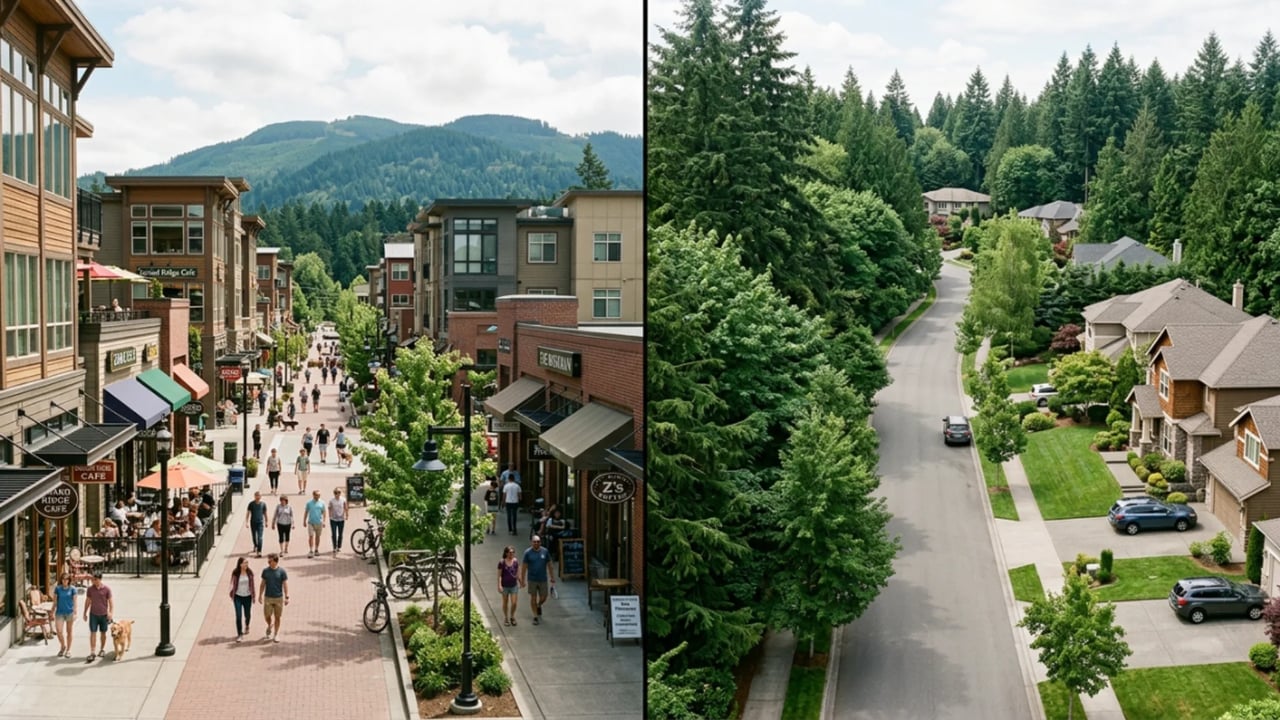
Issaquah Highlands is the stronger seller's market of the two in 2026, even though Sammamish carries the higher price tag. Highlands listings are going pending in as few as five days, with the submarket median closer to sixteen. Sammamish has seen days on market nearly triple over the past year.
Price and market strength are not the same thing, and mixing them up is an expensive mistake for a seller to make.
The number on the "for sale" sign tells you almost nothing about how fast that home is going to move. It tells you what the seller is asking. It doesn't tell you what buyers are doing.
So let's look at what buyers are actually doing.
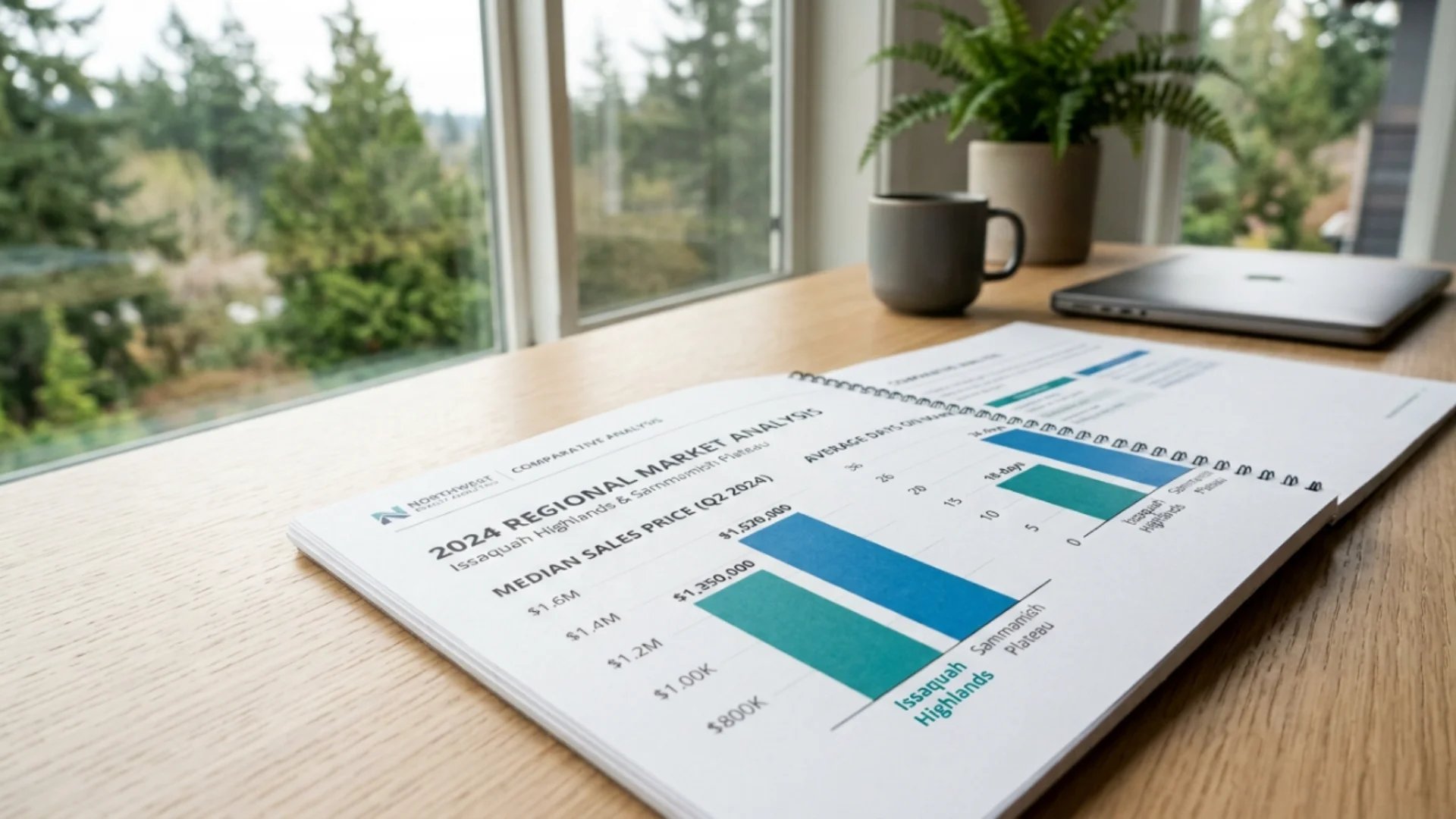
According to Redfin, the median sale price of a home in Sammamish is around $1.5 million, down close to ten percent from a year ago, and homes are going pending in about five days on average. Zillow's numbers tell a similar story: a typical home value of roughly $1.46 million, down close to thirteen percent year over year, with homes moving to pending in around seven days. That's a real price pullback, but it hasn't slowed the pace of sale. Sammamish is still selling fast, it's just selling at a lower price than it was.
Issaquah Highlands is telling the opposite story on price. The median sale price there has climbed to roughly $1.42 million, up more than thirty percent from a year ago. But it's taking longer to get there. Homes average 29 days on market, and even the hottest listings are going pending in around 14 days, not the handful of days you might expect in a truly red-hot market. In fact, Issaquah Highlands is currently moving slower than Issaquah citywide as a whole, where homes go pending in about 22 days on average and the fastest listings in about 6.
So if you're deciding where you'd rather be a seller this year, the honest framing is this: Sammamish rewards a seller who wants speed and is willing to price with the market's recent softening in mind. Issaquah Highlands rewards a seller who wants to capture real price appreciation and has some patience for a longer marketing window.
Price per square foot in Issaquah Highlands is currently around $560, down about 8% from a year ago according to Redfin. That might look like it contradicts the strong median price growth, but it usually points to something specific: the mix of homes selling has shifted toward larger properties, more square footage per sale, which pulls the median up even as the per-square-foot rate eases slightly. For a seller, that's useful to know. Buyers aren't paying a premium for the same size home, they're buying bigger homes, drawn by the walkable streets, retail at Grand Ridge Plaza, and easy access to Microsoft's commuter routes. You can see the full submarket breakdown, including how it compares to Olde Town and the hillside neighborhoods, in our Issaquah home values guide.
Sammamish doesn't have that same concentrated draw pulling buyers back in right now. It's still a strong market by most standards, but it's not the inventory-starved environment that defined the plateau through 2023 and 2024.
This is where a lot of sellers get tripped up, and honestly, it's an easy mistake to make. You see your neighbor's Sammamish home listed at $1.7 million and you assume that means the market's on fire. Meanwhile a home in Issaquah Highlands lists at $1.1 million and it feels like the "smaller" story. It isn't.
It's tempting to read Sammamish's price decline as a sign the market has cooled off broadly. The days-on-market data says otherwise. At roughly five to seven days to pending, per Redfin and Zillow, Sammamish homes are still moving about as fast as anything on the Eastside. What's changed is the price buyers are willing to pay, not their appetite to act quickly once a home is priced right. For a seller, that's an important distinction. A home priced to last year's market will sit, even in a market that's still moving fast for anything priced accurately.
Sammamish is a market where speed is still there, but the price has to be right, closer to today's roughly $1.5 million median than to what a similar home might have fetched a year ago. Issaquah Highlands is a market where the median is climbing, but sellers need to plan for a longer runway, closer to a month than a week or two, especially outside the fastest-selling tier.
That distinction should directly shape your list price and your timeline, whether you're weighing a move now versus waiting, similar to the trade-offs we walk through in our Bellevue vs. Kirkland comparison for sellers on that side of the Eastside.
It's also worth being honest about what's driving each market, because the "why" changes how long the trend is likely to last. Issaquah Highlands is holding up because of something structural: a concentrated buyer pool of tech workers who want walkability,newer housing stock, walkability, Grand Ridge Plaza, parks/trails, and I-90 access to Eastside employment centers. You don't need to guess who the buyers are. That's not a trend that reverses in a quarter. Sammamish's slowdown is more a function of supply catching up to demand after several years of scarcity. That can shift again, but for a seller deciding what to do this year, you have to plan around the market you're in right now, not the one you're hoping shows up in six months.
Here's what none of the citywide comparisons tell you: your home isn't "Issaquah" or "Sammamish". It's a specific address on a specific street, and that's what actually determines your outcome.
If you're in Issaquah Highlands and your home is in solid, market-ready condition, the price appreciation alone makes a real case for listing now, values there are up more than thirty percent year over year, though you should plan for a longer time on market than the citywide average, not a five-day sprint. If you're on the Sammamish Plateau, homes are still moving quickly, but only at prices that reflect where the market sits today, not where it was pricing a year ago.
Either way, citywide numbers are a starting point, not a decision. The neighborhood you're actually in, and the condition your home is in relative to what else is listed nearby, matters more than the headline stat.
There's also a timing question that catches a lot of sellers off guard. A Sammamish listing has to be priced accurately and presented sharply from day one to move within that five to seven day window buyers are used to. A Highlands listing should be priced with roughly a month on market built into the plan, and marketed with that patience in mind, not against an expectation of a quick sale that the current data doesn't support.
This is the part most market comparison posts skip entirely. You don't need to know what the "average" home in Issaquah Highlands or Sammamish is worth. You need to know what your home would net, after commission, closing costs, and any prep work, in each scenario. That's a different number, and it's the one that actually helps you decide.

Sammamish still commands the higher price tag on the Eastside, and it's still moving fast, but that speed now comes at a lower price than a year ago. Issaquah Highlands is appreciating strongly, but it takes longer to get a home sold there than either Sammamish or Issaquah as a whole. Neither market is flatly "better". The right one for you depends on whether speed or price growth matters more for your situation. If you're weighing a sale in either market, the smartest next step isn't reading another comparison. It's finding out what your specific home would actually net.
The number that matters isn't the citywide median—it's what your specific home is likely to sell for and what you'll actually walk away with after commissions, closing costs and prep. Run your numbers through our seller net proceeds estimator or talk with our team directly about your Issaquah Highlands or Sammamish Plateau home.
Stay up to date on the latest real estate trends.
buying
selling and buying
Selling
buying
selling and buying
Selling
selling and buying
Selling
selling and buying
Contact Details
Nic Chambers
11901 NE Village Plaza, Suite 271 Kirkland WA 98034