Bellevue vs. Kirkland Home Prices 2026: Should You Sell Now or Wait?
selling and buying Nic Chambers July 27, 2026
selling and buying Nic Chambers July 27, 2026
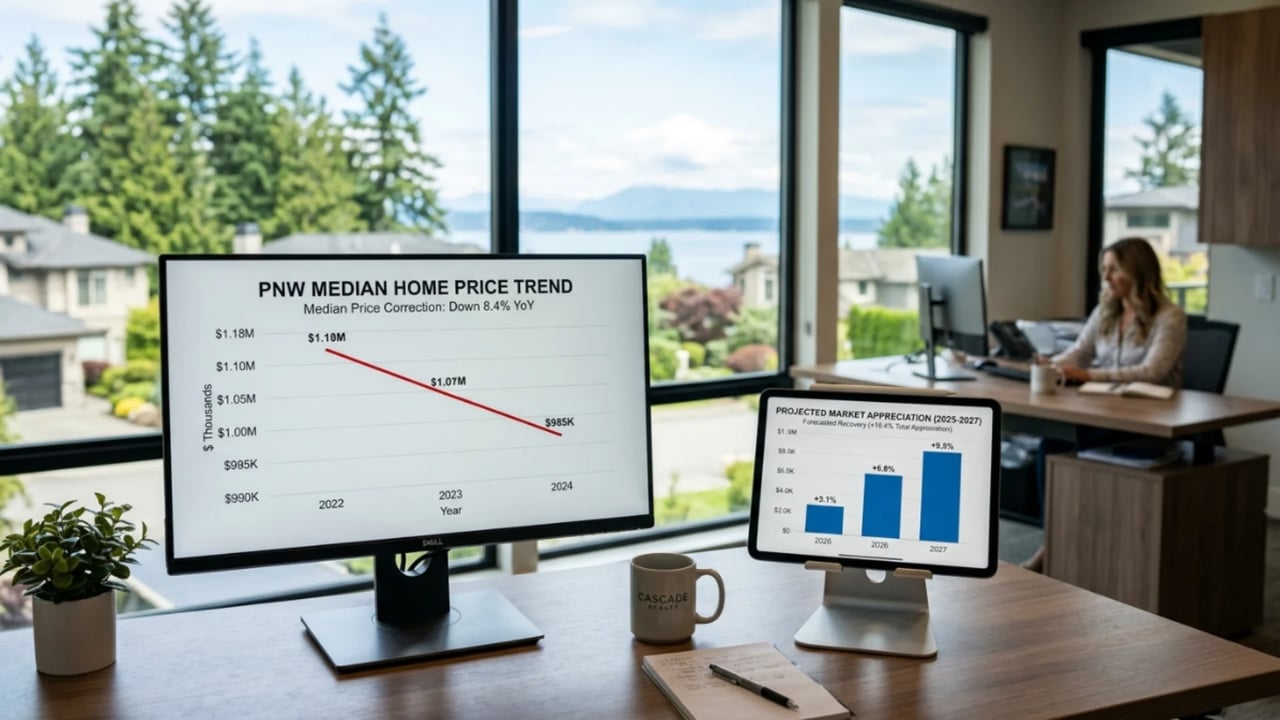
If you've searched “will home prices drop in Kirkland” or “Bellevue home prices 2026”, you've probably landed on five different answers already. One source says Bellevue prices are down double digits. Another says Eastside prices are forecast to rise. Both are technically true, and neither one tells you what to actually do if you're sitting on a Kirkland or Bellevue home right now.
Here's what the current data shows for both markets, why the numbers seem to contradict each other, and how to turn a forecast into an actual decision about whether to list this year or wait. In my experience, pricing strategy usually has a bigger impact on final sale price than trying to time the market perfectly.
Nothing here replaces a conversation about your specific home, but it will give you the same framework I walk Eastside sellers through before we talk pricing.
The city-level median also hides a real range across segments, and it runs the opposite direction a quick read might suggest. In Bellevue, condos typically sell for $500,000 to $680,000, while single-family homes trade well above the blended citywide median, commonly $1.6 million to $2 million depending on neighborhood. That's why the $1.5 million citywide figure sits below the typical single-family sale price: condos pull the blended number down, while single-family homes in core neighborhoods like Bridle Trails, Medina, and Clyde Hill sell well above it. Kirkland shows the same pattern. Blended sales across all property types median around $1.3 million, while single-family homes alone closed at a median closer to $1.6 million over the past six months, per NWMLS data.
At the same time, other forecasts point the other direction: projections built on anticipated rate relief and continued land scarcity call for modest 2 to 4 percent appreciation across the Eastside in 2026.
Both sets of numbers can be accurate at once, because they're measuring different things. Year-over-year median price reflects whatever mix of homes actually closed in a given window, and a wave of smaller or lower-tier closings can pull a citywide median down even while comparable homes are holding their value.
Forward-looking forecasts, by contrast, are modeling demand and supply trends rather than reporting what already sold. Price per square foot tends to be the cleaner read of true value change, and it's told a steadier story than the headline median in both cities.
Before worrying about where the market is heading, ask yourself three questions:
Those answers matter far more than a national housing forecast. See What Buyers Would Compare Your Home Against.
Supply is where Kirkland and Bellevue genuinely diverge, and it's the number worth watching more than any single price headline.
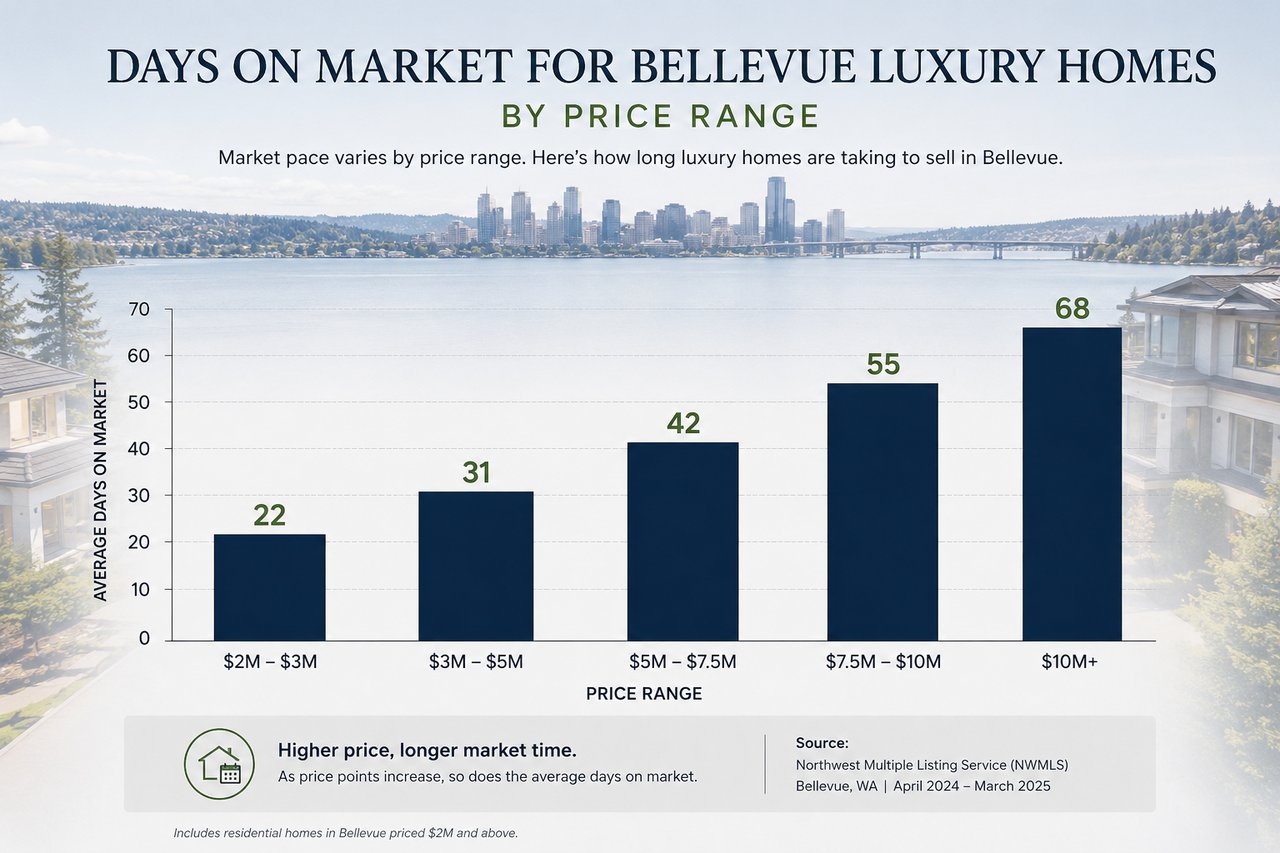
Bellevue's roughly 2.4 to 2.6 months of supply keeps it firmly in seller's-market territory, driven largely by tight land supply and steady demand in core school-district neighborhoods. Kirkland's supply has climbed closer to 4.2 to 4.3 months, edging toward the balanced range, with inventory up roughly 34 percent year-over-year. That's the real signal underneath the conflicting headlines: Bellevue has stayed structurally tight, while Kirkland has genuinely loosened. I've seen this firsthand over the past year. Well-priced Bellevue homes in desirable school districts are still attracting multiple offers, while similar homes that are priced aggressively or need updating are sitting much longer than many sellers expect. Inventory tells part of the story, but buyers are being far more selective than they were just a few years ago.
The city-level median also hides a real split between condos and single-family homes, and that split explains a lot of the confusion sellers run into when comparing their own home to a headline number. In Bellevue, condos are running closer to $680,000 while single-family homes average around $1.23 million, two very different markets sharing one median. Kirkland shows the same pattern, with condos closer to $630,000 against single-family homes averaging roughly $1.36 million.
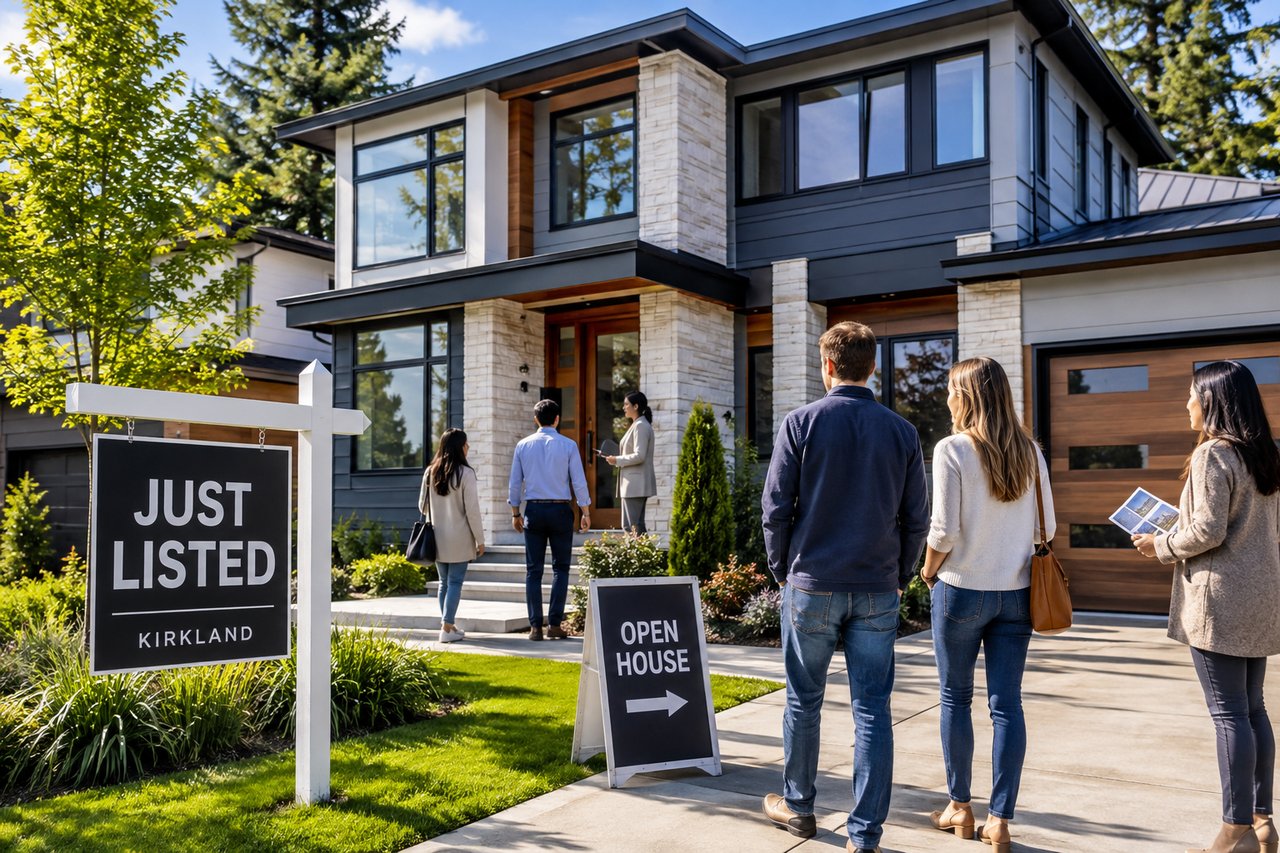
A homeowner planning to sell a single-family property isn't really competing with every listing in Bellevue or Kirkland. They're competing with the handful of homes a buyer will tour this weekend that fall into the same price range, neighborhood, school district, and condition.
That's why two homes with nearly identical square footage can have very different outcomes. One attracts multiple offers, while another sits because buyers see stronger alternatives nearby.
Mortgage rates add another layer worth watching. Current forecasts from Fannie Mae and the Mortgage Bankers Association put 2027 rates somewhere between roughly 5.6 and 6.4 percent, a new normal rather than a return to pandemic-era lows. That range matters for your pricing strategy: a half-point drop in rates can meaningfully expand affordability at the mid-tier price points that make up most of Kirkland's market, which is part of why some forecasts still call for modest appreciation even as year-over-year medians look soft today.
One thing I've noticed helping Eastside sellers this year is that buyers are spending more time comparing homes before making an offer. That makes pricing accurately from day one even more important. See What Your Home Could Sell For in Today's Market.
Every month you hold a home you're planning to sell has a real cost, even if it doesn't show up on a single line item. On a $1.3 million Kirkland home, property taxes alone run roughly 0.84 percent annually, or about $910 a month, before factoring mortgage interest, insurance, and basic upkeep. None of that comes back to you. Some homeowners assume waiting six months will automatically mean a higher selling price. In my experience, that's rarely the deciding factor. Carrying costs, additional competition, and changing buyer expectations often have a much bigger impact than modest appreciation.
What many sellers don't realize is that waiting isn't free. Even if home values rise slightly, carrying costs and additional competition can quietly offset much of that gain. The question isn't simply whether prices might increase, it's whether your net proceeds improve after accounting for the cost of waiting.
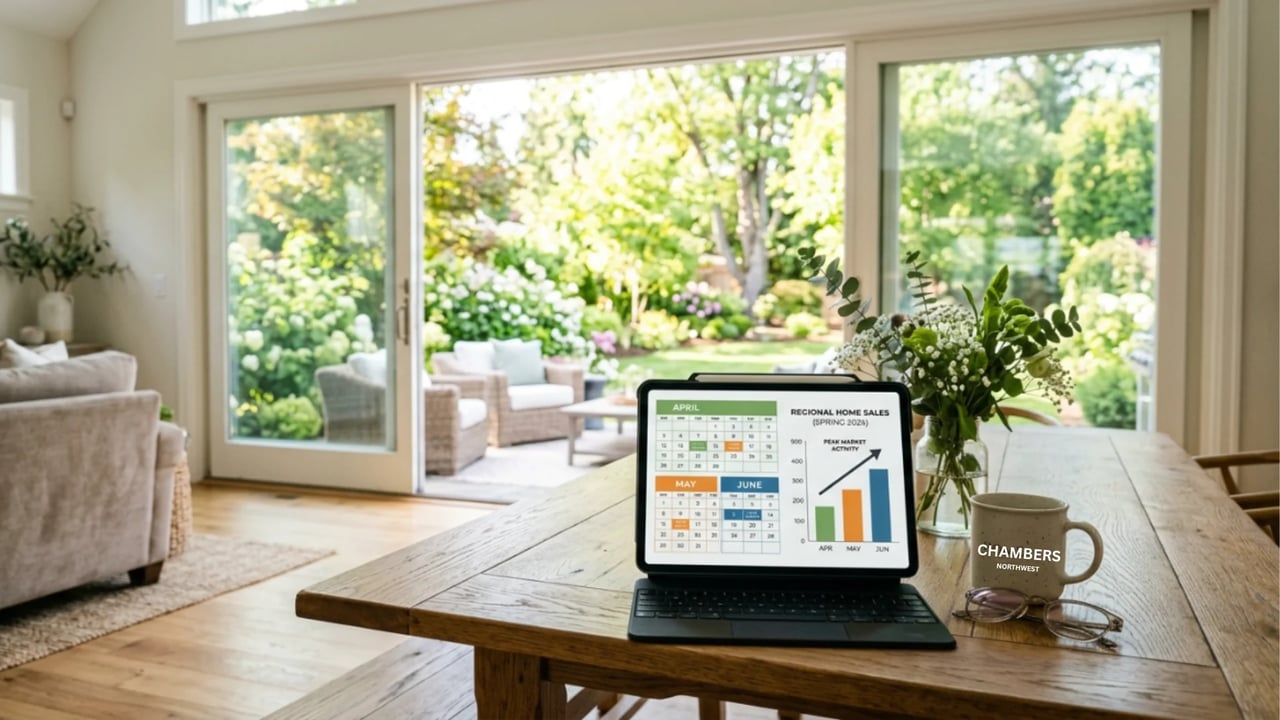
And with Kirkland's inventory already up about a third year-over-year, waiting for the textbook spring window means listing into a more crowded field than you'd face today, with more competing homes for buyers to compare yours against.
Commission and Washington's Real Estate Excise Tax don't change based on timing, so the only real variables in play when you wait are your carrying costs, how much competing inventory shows up in the meantime, and whether the final sale price you achieve outpaces what those months actually cost you. Running your own numbers through the Seller Net Proceeds Calculator is the fastest way to see whether that math works in your favor before you decide.
No two Eastside neighborhoods behave exactly the same. I've had listings receive multiple offers within days while another home only a few miles away required more strategic pricing and preparation because buyers had significantly more options. That's why neighborhood-level data almost always matters more than citywide averages.
Some homes benefit from waiting a few weeks for repairs or staging, while others may be better positioned to list sooner. The difference comes down to your property's condition, location, and the competition buyers will see when your home hits the market.
Get personalized advice based on your home's location and current market conditions before making your decision.
Waiting isn't automatically the wrong call.
In fact, some sellers benefit from waiting, but only when there's a clear reason. If a few weeks allows you to complete repairs, improve presentation, or launch into a stronger local market, that extra preparation may pay for itself. Waiting simply because you're hoping headlines improve is a much riskier strategy.
If you're in one of Bellevue's tightest core single-family segments, where 2.4 months of supply is still firmly in sellers' favor, a few extra months of prep time costs you very little competitively. The same is true if your home genuinely needs work before it can compete: a rushed listing in a softening Kirkland market often nets less than a well-prepared one that launches a month or two later.
The decision isn't “spring or now”. It's whether the specific gap between your home's current condition and buyer expectations is worth closing before you list, and whether your submarket can absorb the wait without more competition eating into your leverage.
There's also a practical middle path worth considering. Sellers who aren't sure which side of this they're on can start the prep work, inspections, minor repairs, decluttering, staging consultations, now, while deciding on a launch date later. That way you're not choosing between listing underprepared today or losing months to indecision. You're simply controlling the one variable that's fully in your hands regardless of what Bellevue or Kirkland's broader numbers do next quarter.
While sellers focus on market forecasts, buyers usually make decisions much differently. They're comparing today's listings, recent sales, monthly payments, commute times, school districts, and the overall condition of each home. One trend that's become much more noticeable this year is how thoroughly buyers are shopping before making an offer. It's common for buyers to tour five or six similar homes before deciding, and they often come back for a second look before writing. Homes that are staged well, priced realistically, and move-in ready continue to stand out, while even small deferred maintenance can push buyers toward competing listings.
That means pricing and presentation often have a bigger impact on your final sale price than whether the broader market moves up or down another two or three percent.
Homes that are priced realistically and prepared well continue attracting strong interest, even in neighborhoods where inventory has increased.
Instead of asking whether it's a good time to sell Bellevue or Kirkland real estate, a better question is whether your specific neighborhood is giving sellers an advantage today. That's the answer buyers respond to, and it's the one that matters most when deciding whether to list now or later.
In Bellevue, particularly for single-family homes in established school-district neighborhoods, current conditions still favor sellers: tight supply, fast sales, and steady demand from a high-earning buyer pool that hasn't gone anywhere. Waiting there carries real opportunity cost with limited upside, since there's little evidence the next few months will be meaningfully tighter than today.
In Kirkland, the calculus shifts. With months of supply climbing and inventory up roughly a third year-over-year, the market is trending toward buyers gaining more leverage over time, not less. That doesn't mean Kirkland is a bad market to sell in right now. It means the advantage of listing sooner rather than later is more concrete there than in Bellevue's tighter core segments, especially for sellers whose homes are already reasonably prepared to show.
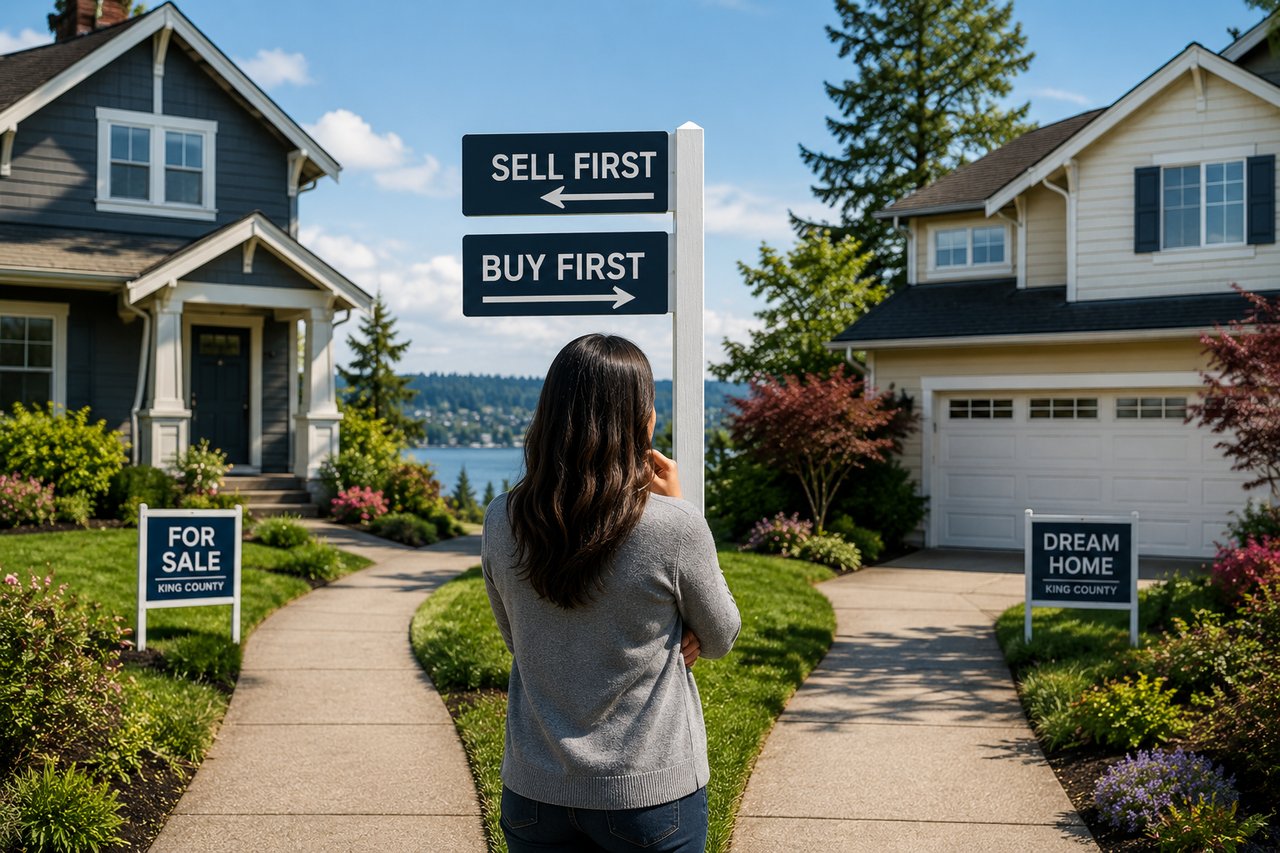
If you're like most homeowners, you're probably trying to avoid two expensive mistakes:
The challenge is that neither decision can be made from citywide averages alone. Looking at recent comparable sales, current neighborhood inventory, and buyer demand around your property provides a much clearer answer than national headlines.
Not sure where your home stands? A free home valuation gives you a realistic estimate based on recent neighborhood activity, not broad market averages.
Bellevue and Kirkland are not telling the same story in 2026, and neither one is telling a simple story on its own. Bellevue remains tight and seller-favorable in its core segments even as headline prices soften. Kirkland has genuinely rebalanced, with inventory growth that changes the calculus on how long you can afford to wait. The forecast headlines are a starting point, not a decision. Your actual numbers, on your actual home, in your actual neighborhood, are what determine whether now or later nets you more.
That's true whether you're weighing a single-family home in Bellevue's school district core or a condo in one of Kirkland's more competitive submarkets, where the underlying dynamics can look nothing like the citywide average.
One thing I enjoy most about working with sellers is helping them separate the headlines from what's actually happening in their neighborhood. Every week I'm talking with buyers, touring competing listings, reviewing new inventory, and negotiating offers. That gives me a real-time view of the market that goes well beyond quarterly reports or national forecasts.
Every neighborhood across Bellevue and Kirkland is moving differently right now. Before deciding whether to list this season or wait another six months, let's look at what buyers are actually paying for homes like yours, not just what the headlines say.
I'll prepare a personalized pricing analysis using recent comparable sales, active competition, buyer demand, and local market trends so you can make your decision with confidence.
You can also use the Seller Net Proceeds Calculator to estimate your potential proceeds before putting your home on the market.
While the overall market has shifted, many Bellevue neighborhoods remain seller-friendly because inventory is still relatively low. The right timing depends on your property's location, condition, and the level of competition nearby.
Not necessarily. Waiting can mean more competing listings, higher carrying costs, and increased buyer choice. Reviewing your neighborhood market conditions helps determine whether waiting is likely to improve your outcome.
The most accurate estimate comes from comparing your home with recent nearby sales, current listings, and local buyer demand rather than relying solely on citywide median prices.
Stay up to date on the latest real estate trends.
selling and buying
Selling

buying
selling and buying
Selling
selling and buying
Selling
selling and buying
selling and buying
Contact Details
Nic Chambers
11901 NE Village Plaza, Suite 271 Kirkland WA 98034