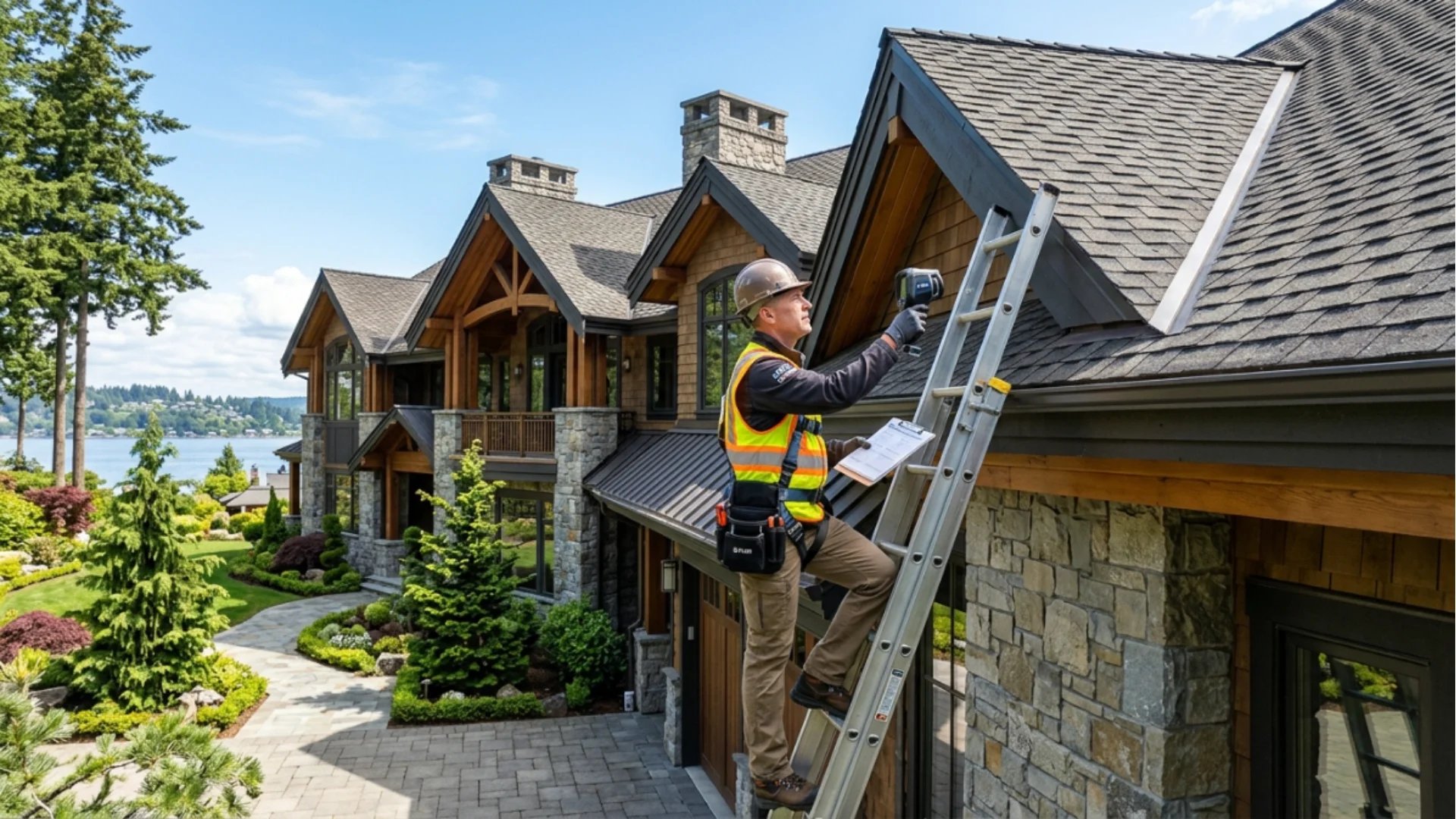
Pre-Listing Inspection Costs in Kirkland, Bellevue & Redmond
Nic Chambers June 25, 2026
Nic Chambers June 25, 2026
But here's the thing. On a Kirkland, Bellevue, or Redmond home, where you're likely selling somewhere between $750K and $1.5M, a single surprise surfacing in a buyer's inspection report can trigger a $15,000–$40,000 renegotiation, push your close date back three weeks, or blow up a deal entirely right when you thought you were done. That $500–$800 inspection starts looking a lot cheaper when you frame it that way.
Or maybe it doesn't. Because there's a side to pre-listing inspections in Washington that most sellers don't hear about clearly until it's too late, one that's tied directly to your legal disclosure obligations. Getting that part wrong costs more than any inspection fee ever would.
This post covers the real costs, the real benefits, and an honest answer to whether a pre-listing inspection makes sense for your specific home. And if you want to see how inspection prep affects your actual net proceeds, our free calculator at Chambersnw can show you the numbers before you make any decisions.
Let's start with the number you actually came here for.
In the Kirkland, Bellevue, and Redmond markets, home inspection pricing runs above the national average and above most of the rest of Washington. The statewide average for a standard single-family home is $550–$750 (iBuyer.com, February 2026). On the Eastside, experienced inspectors working premium-priced, complex homes often land at or above that ceiling.
For a typical 2,500–3,500 sq ft Kirkland or Bellevue single-family home, budget $550–$750 for the base inspection, and more if you add ancillary services like a sewer scope or mold test. You'll find lower quotes online, but aggregate platforms often pull from outdated submissions or smaller, older homes that don't reflect current Eastside pricing.
The table below reflects what inspectors are actually charging in this market right now.
Home Size / Type | Standard Inspection | Most Useful Add-On | Add-On Cost |
Condo / townhome | $350 – $500 | Sewer scope | $275 – $325 |
Small SFR (1,500–2,200 sq ft) | $450 – $600 | Radon test | $100 – $200 |
Mid SFR (2,200–3,200 sq ft) | $550 – $700 | Mold screening | $150 – $300 |
Larger SFR (3,200–4,500 sq ft) | $650 – $850 | Infrared scan | $300 – $500 |
Luxury / 4,500+ sq ft | $800 – $1,100+ | Oil tank sweep | $200 – $400 |
Sewer scope note: Bellevue-area inspector 4 Seasons Inspects lists sewer scopes at $275 bundled with a home inspection, or $325 standalone (2026 published pricing). In established Kirkland and Bellevue neighborhoods with mature trees, sewer root intrusion is common. A $275 scope before listing can save you from running into the tens of thousands of a surprise mid-transaction.
Three things consistently push Kirkland, Bellevue, and Redmond inspections toward the higher end of the range:
Washington State's Form 17 Seller Disclosure Statement, mandatory under RCW 64.06.020 since 1995, is built around one specific legal standard: your actual knowledge of your property's condition. Right now, if you genuinely don't know whether your crawl space has moisture issues or your sewer line has root intrusion, you can truthfully answer "don't know" on Form 17. That is a legally defensible answer.
The moment you receive a pre-listing inspection report, that changes. You now know. Everything material in that report, structural concerns, water intrusion, electrical issues, roof age, deferred maintenance, becomes part of your actual knowledge. And Washington law requires you to disclose all of it to any prospective buyer.
Once the inspection report exists, you can't un-ring that bell. Washington law (RCW 64.06.050) protects sellers from liability for things they genuinely didn't know, but that protection disappears the moment you do know. Omitting material defects from Form 17 after receiving an inspection report exposes you to fraud and negligent misrepresentation claims.
Once the inspection report exists, you can't un-ring that bell. Washington law (RCW 64.06.050) protects sellers from liability for things they genuinely didn't know, but that protection disappears the moment you do know. Omitting material defects from Form 17 after receiving an inspection report exposes you to fraud and negligent misrepresentation claims.
What does this mean practically? It means you should only order a pre-listing inspection when you're prepared to deal with whatever it finds, fix it, disclose it, price for it, or some combination. If you have real uncertainty about your home's condition and haven't thought through your response to potential issues, talk to your listing agent before you schedule the inspector. Sometimes a targeted investigation makes more strategic sense than a full sweep.
Form 17 covers seven categories of property condition: title and legal, water and sewer, structural and roof, mechanical systems (HVAC, electrical, plumbing), environmental hazards, manufactured home items if applicable, and a catch-all for anything else a buyer should know.
Washington law requires Form 17 to be delivered to the buyer within 5 business days of mutual acceptance of the purchase and sale agreement. After receiving it, buyers have 3 business days to rescind the contract, no explanation needed, earnest money will be returned. Sellers who delay or omit Form 17 extend that rescission window, sometimes all the way to closing. That's not leverage. That's liability.
One more thing worth knowing: if you deliver Form 17 and then learn of a new defect before closing, including from something like a pre-listing inspection, you're required to amend the disclosure. The buyer gets another 3-day rescission window. The cleanest version of this whole process is knowing your home's condition going in, not discovering it mid-transaction.
Your specific home and situation will determine which side of this table matters more.
WHY GET ONE | THINK CAREFULLY ABOUT THIS |
You find issues first — on your terms. You decide how to respond before any buyer sees them. | Once you have the report, you must disclose everything material in it on Form 17 (RCW 64.06.020). You can't un-know it. |
Removes the most common trigger for post-inspection renegotiations and late-stage deal collapses. | You pay $400–$800+ out of pocket before you've accepted a single offer. |
Documented repairs give you real support for a stronger list price — not just a gut feeling. | Some buyers will still run their own inspector regardless. You can't guarantee they'll waive it. |
In competitive Eastside situations, a clean pre-listing report can encourage buyers to waive their inspection contingency. | If you find something major you weren't expecting, you now have a strategic problem — not just a repair bill. |
Signals honesty and confidence to Bellevue and Kirkland buyers, who are typically sophisticated and read disclosure documents closely. | Requires lead time before listing: scheduling, potential repairs, and possible re-inspection. |
Pre-listing inspections make the most sense for well-maintained homes where you're confident there are no major lurking surprises. They make the least sense when you suspect something significant might be wrong, and you haven't decided how to handle it. In that scenario, get strategic advice from your listing agent first, before you create a paper trail of known defects you don't yet have a plan for.
This is really the question underneath every hesitation sellers have about pre-listing inspections. It deserves a straight answer.
This is usually the right call when the repair is straightforward and cost-effective. Fix it properly, document it with contractor invoices and any warranties, then disclose both the prior condition and the remediation on Form 17.
Buyers see a proactively maintained home, not a problem. And documented repairs done by licensed contractors can actively support a stronger list price, because you've removed the uncertainty that normally drives concession requests. The highest-ROI pre-listing repairs we see on the Eastside consistently: crawl space vapor barriers, minor electrical panel work, water heater replacement nearing the end of life, gutter and drainage corrections, deck repairs, and deferred roof maintenance.
For bigger items, a roof with 4–5 years of remaining life, an aging furnace, a sewer line that needs eventual attention, you can disclose the known condition, provide the inspection report and a contractor estimate, and set your list price to reflect it.
Buyers who know exactly what they're buying are far less likely to renegotiate after their own inspection, because there are no surprises left to negotiate over. You've removed the most common post-inspection leverage point before the transaction even starts. That's not giving money away. That's controlling the negotiation on your terms.
If your pre-listing inspection reveals something material and you choose not to address or disclose it, you've created a serious legal problem. Washington law is clear: sellers who fail to disclose known material defects on Form 17 face potential fraud or negligent misrepresentation claims after closing. The most common post-closing real estate disputes in Washington involve exactly this.
The inspection didn't create your liability. The undisclosed defect did. The inspection just forced you to confront it on your timeline, which is always better than a buyer's attorney doing it on theirs.
Let's put real numbers on this. Say you're listing a 2,800 sq ft home in Kirkland at $925,000.
Scenario A, No pre-listing inspection: A buyer's inspector finds $24,000 in deferred items, crawl space moisture, an aging electrical panel, and a roof with limited remaining life. The buyer requests a $22,000 repair credit. After negotiation, you settle on $15,000. The close also slips 10 days while everyone works through it.
Scenario B, Pre-listing inspection plus targeted repairs: You spend $650 on the inspection. The same three issues come up. You address the crawl space ($2,800) and electrical panel ($1,400), and disclose the roof condition with a current estimate. You list with full transparency. The buyer's inspector finds nothing new. No renegotiation. Clean close on schedule.
The math: Scenario B cost you $4,850 upfront and saved $15,000 in concessions. That's a $10,150 improvement to your net proceeds, plus a faster, smoother transaction.
This isn't a guaranteed outcome every time. But on a $900K+ Eastside home, it's the pattern we see more often than not. On many Eastside homes, the cost of a mid-transaction surprise ends up far exceeding the cost of a pre-listing inspection. For the full picture of what you'll pay at closing, see our King County seller closing costs guide.
For most well-maintained Kirkland, Bellevue, and Redmond homes, a pre-listing inspection is worth the $500–$800 it costs. Not because it's required. Not because it guarantees a higher offer. But on a $900K+ home, the cost of a mid-transaction surprise almost always exceeds the inspection fee by a factor of ten or more.
The $650 inspection isn't the expensive decision. The $15,000 concession you didn't see coming is.
The Form 17 disclosure obligation is real, and it matters. Once you know something, you can't un-know it, and Washington law will hold you to that. So the right approach is only to inspect when you're genuinely prepared to deal with whatever comes up: fix it, disclose it, price for it.
That's the conversation we have with every seller before they list. What does the home need? What's the repair ROI? How does inspection prep affect your net? These aren't abstract questions; they have real dollar answers.
Not sure whether a pre-listing inspection makes sense for your home? Before spending money on inspections or repairs, it's worth understanding where buyers are likely to focus and which issues are actually worth addressing.
I help Eastside sellers evaluate: whether a pre-listing inspection makes sense, which repairs have the highest ROI, what should be disclosed versus repaired, and how those decisions affect net proceeds. Run your numbers using the Seller Net Proceeds Calculator. Or schedule a consultation with Nic about your home at Chambers Northwest.
You're not automatically required to hand over the full report. But you are required to disclose any material defects it revealed on Form 17. In practice, many experienced Eastside listing agents proactively share the report; it builds trust, signals confidence in the home, and gives buyers less reason to bring in an aggressive inspector fishing for negotiating leverage. Your agent should help you decide what makes strategic sense for your specific home.
Yes. Washington buyers have the right to conduct their own inspection unless they explicitly waive it in writing. Some buyers in competitive multi-offer Eastside situations do waive it, especially on well-maintained homes with clean pre-listing reports, but you can't build your strategy around that assumption. A pre-listing inspection reduces the risk of a damaging outcome. It doesn't eliminate the buyer's right to look.
Look for an active Washington State Home Inspector license (issued by the Department of Labor and Industries) plus a national certification, ASHI or InterNACHI are the two main ones. On the Eastside, what matters most is hands-on experience with 1980s–2000s Pacific Northwest construction, familiarity with local drainage and moisture patterns, and the ability to deliver a detailed report within 24 hours. Your listing agent should be able to refer you to two or three inspectors they've seen perform well in actual transactions, not just names pulled from a directory.
Minor deferred maintenance, like gutters, vapor barriers, minor electrical work, and water heater near the end of life, almost always has a positive ROI when fixed before listing in this market. Major system replacements (full roof, foundation work, sewer relining) often make more sense to disclose and price for, especially when buyers are sophisticated enough to understand what they're seeing. The calculation depends on your specific home, your list price strategy, and the current absorption rate in your submarket. Our Seller Services page covers how we walk through this with every seller we represent.
Stay up to date on the latest real estate trends.
buying
selling and buying
Selling

buying
selling and buying

Selling

selling and buying
Selling
selling and buying
Contact Details

Nic Chambers
11901 NE Village Plaza, Suite 271 Kirkland WA 98034