Best Time to Sell a Home in King County (2026 Guide)
selling and buying Nic Chambers July 27, 2026
selling and buying Nic Chambers July 27, 2026
One of the questions I hear most from homeowners is, "Should I wait until spring to sell?" It's a fair question, but the answer is usually more nuanced than people expect. I've seen homes sell above asking price in January and others struggle during peak spring because they launched alongside dozens of competing listings.
Because King County's selling season has a real, documented shape to it, but the month that nets you the most depends on your specific city, your home's condition, and how much you value certainty over a slightly higher ceiling.
Here's what the data shows for Kirkland and Redmond sellers, and how to build a listing timeline instead of picking a month because it sounds right.
The goal isn't to find one perfect month. It's to understand how buyer demand, competition, and your neighborhood affect your bottom line.
Two homes listed in the same week can have very different outcomes depending on their neighborhood, condition, price point, and competing inventory. That's why the best time to sell isn't always the same for every homeowner.
Wondering when your home should hit the market? Get a personalized home valuation and I'll help you determine the best listing window based on your neighborhood, current competition, and your goals.
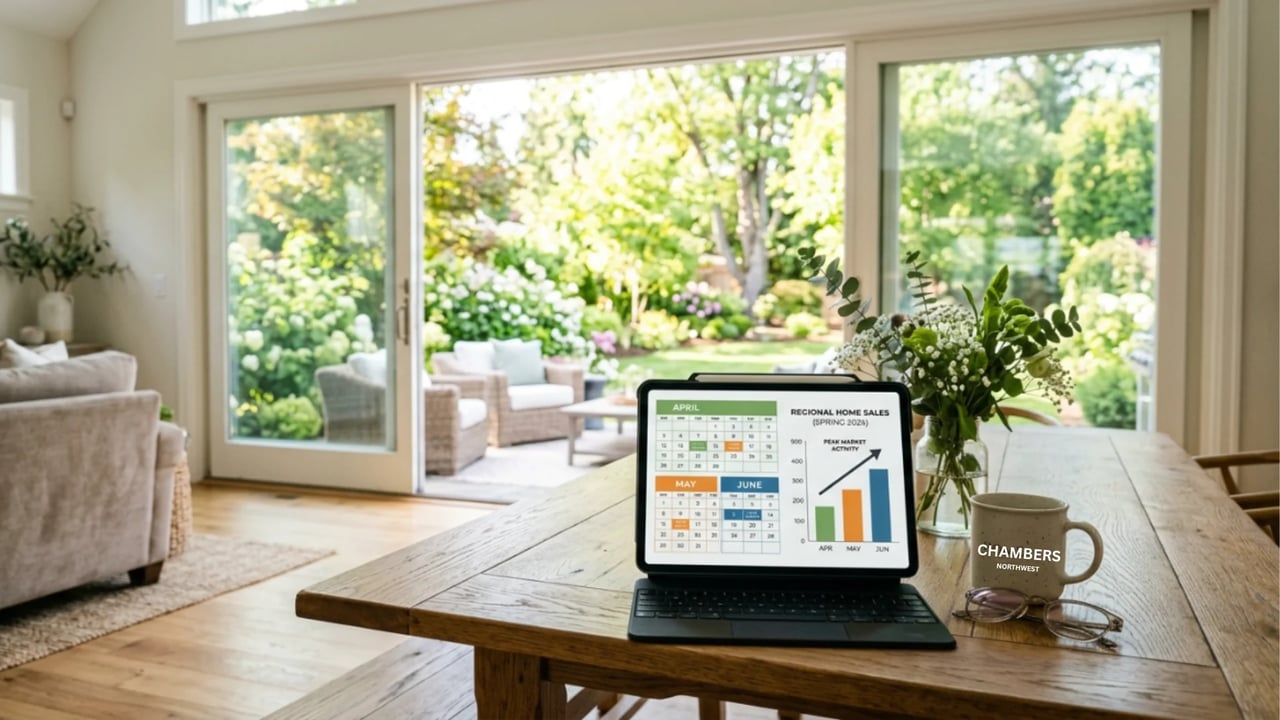
Closed sales volume in King County has historically peaked in late spring and early summer, and 2026 data backs that pattern up locally. Kirkland homes are currently selling in around 13 days and Redmond homes in around 12 days, both well inside the faster end of the yearly range agents report.
Nationally, ATTOM Data Solutions' 2026 analysis of more than 52 million home sales found seller premiums peak in early spring, with March listings carrying a 10.7 percent premium over market value and April and May close behind at 10.2 percent. Those national figures aren't King County-specific, but local brokerages tracking NWMLS data consistently describe the same late-April-through-June window running 3% to 7% higher and 10 to 18 days faster than winter listings in the Seattle metro, which lines up with what Kirkland and Redmond are showing right now.
Those seasonal trends provide a helpful benchmark, but buyers won't compare your home with every sale in King County. They'll compare it with similar homes currently on the market in your neighborhood.
That's why timing, pricing, and local competition matter just as much as the month on the calendar. See how your home compares with recent neighborhood sales before deciding when to list.
Spring gets all the attention, I've also seen sellers overlook the fall market. Many assume buyers disappear after summer, but serious relocation buyers are often shopping against much less competition. Some of my smoothest transactions have happened in September and October because buyers had fewer homes to choose from.
Early in the year, roughly January through March, is a genuinely underused window too. Sellers who prep in the fourth quarter and list before the spring surge of new inventory arrives are competing against far fewer homes, which matters even more in Kirkland right now given how much inventory has grown year-over-year.
Mid-summer is worth a specific caution. By late July, I often notice buyer urgency changing. Families have either already found a home before school starts or decide to wait until after the holidays, which can make pricing strategy even more important. If your timeline lands you in that window, price sharply from day one rather than testing a high number and planning to adjust; late-summer price reductions tend to stand out more than they would earlier in the season, precisely because buyers notice the pattern.
Day of the week matters too, even if it's a smaller lever: listings that go live midweek, particularly Thursday, tend to catch buyers browsing ahead of weekend showings, giving a new listing a stronger first 48 hours than a Monday launch typically sees.
Many homeowners automatically wait for spring because they've heard it's the "best" time to sell. But if dozens of competing homes hit your neighborhood at the same time, waiting can actually reduce your negotiating power. Sometimes, listing before everyone else creates a stronger opportunity.
Those answers usually matter more than the month itself.
Waiting for spring assumes spring will still favor you by the time you get there, and that's not guaranteed.
One thing I often tell sellers is that waiting only pays off if the additional value exceeds the cost of waiting. More mortgage payments, property taxes, insurance, maintenance, and additional competing listings can quickly reduce any future price gains.
Kirkland's inventory is already up roughly 34 percent year-over-year, with months of supply climbing toward the balanced range. If that trend continues, the spring 2027 field could be even more crowded than what a well-prepared seller would face by listing this fall or early next year instead.
Since commission, REET, and closing costs stay fixed no matter which month you list in, the only variables that actually move with timing are your final sale price, your days on market, and how much competing inventory you're up against when buyers start comparing homes.
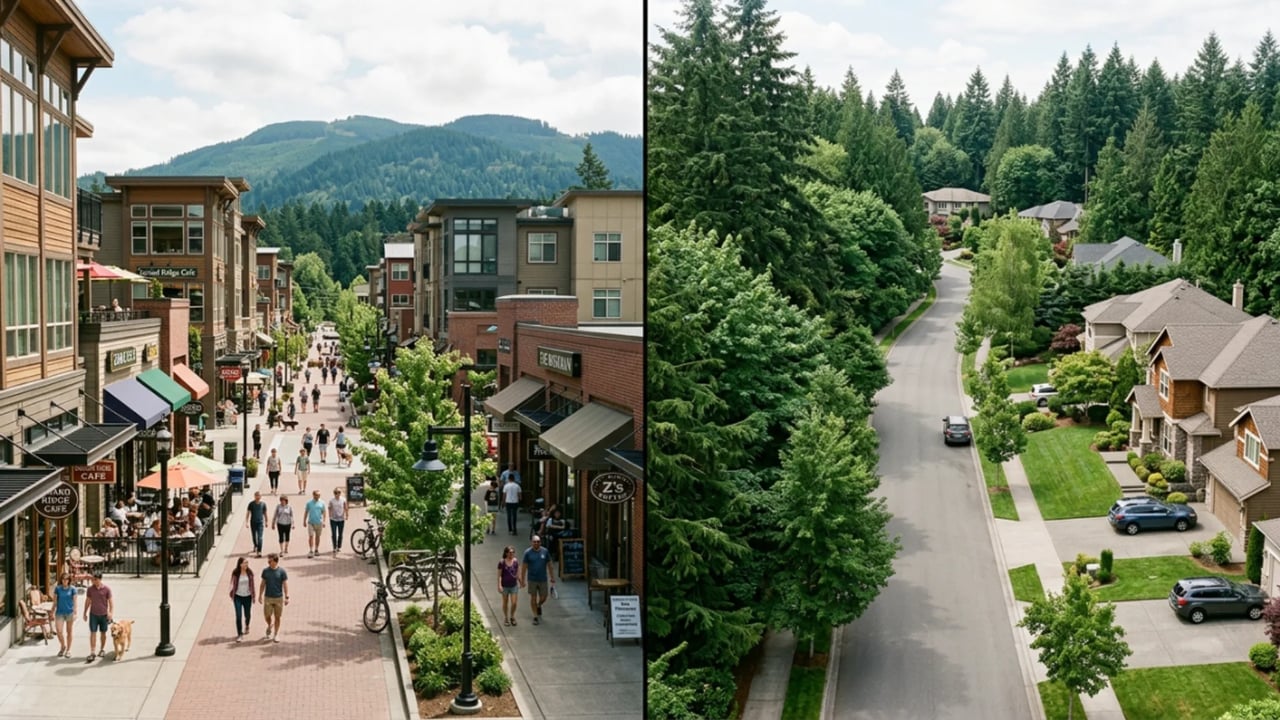
Citywide trends are helpful, but buyers don't search "King County". They search neighborhoods. A seller in Overlake may face a very different level of competition than someone in Kingsgate or Totem Lake, even during the same month. That's why neighborhood-specific data often matters more than seasonal averages.
The two cities don't move in lockstep. Redmond's market leans heavily on Microsoft's hiring and relocation calendar, and the 98052 and Overlake submarket in particular tends to stay tighter and hotter than the broader Redmond median suggests, which means a Redmond seller near the tech corridor may see less seasonal swing than one farther out.
Kirkland's waterfront and lake-view inventory tends to show best, and sell fastest, in late spring and summer for the obvious staging reasons, while inland neighborhoods like Kingsgate and Totem Lake are noticeably less season-sensitive and can perform well in an off-peak listing window.
School calendars add a layer on top of both patterns. Families relocating for the Lake Washington School District, which serves both cities, tend to push hardest to close before the academic year starts in September, which is part of why late spring and early summer stay so competitive even as broader Eastside inventory grows. A Redmond or Kirkland seller targeting that buyer pool specifically benefits from listing early enough to close before that deadline, since a family racing the school calendar will often move faster and negotiate less aggressively than a buyer with no fixed timeline.
Timing ultimately matters because of what it does to your bottom line, not because one month sounds better than another.
REET, commission percentages, and recording fees don't move with the calendar, so a stronger sale price achieved in a faster, more competitive window flows almost entirely to your net proceeds rather than getting absorbed by higher costs elsewhere.
The reverse is also true: a home that sits for an extra six to eight weeks in a slower window often ends up with at least one price reduction, and buyers who spot a reduction tend to negotiate harder on everything else, from repair credits to closing costs.
A home that sells quickly with fewer concessions often leaves the seller with more money than a home that sits on the market waiting for a slightly higher offer.
That's why experienced sellers focus on net proceeds, not just the final sale price.
Run the comparison on a $1.3 million Kirkland home and the gap becomes concrete. A peak-season sale at or slightly above list price, with a clean 13-day timeline, keeps commission, REET, and closing costs at their expected levels against a strong top-line number.
The same home listed into a slower window, taking one price cut and landing 3 to 5 percent under its original list price, loses tens of thousands of dollars in net proceeds even though every fixed cost, commission percentage, REET rate, recording fee, stayed exactly the same. The variable that moved was the sale price itself, and that's the number timing actually controls.
Most homeowners aren't asking, "What's the best month?" They're asking, "What's the best month for MY home?"
The answer depends on your neighborhood, condition, competing listings, and buyer demand, not just the season. Get a personalized timing strategy before choosing your listing date.
One mistake I see constantly: a homeowner decides they want to list in May, then starts calling contractors and stagers in late April. By the time repairs get scheduled, decluttering gets done, and photography gets booked, May has quietly turned into June, and the home misses the exact window it was supposed to catch.
The most successful listings I work on usually start 30 to 60 days before the actual list date, not the week of. That's enough time to handle whatever comes up in a pre-listing walkthrough, get a stager and photographer booked around good light instead of whoever's available, and land on a data-backed price instead of a guess. None of that holds up when it's compressed into a week or two, and it usually shows in the final result.
If you're targeting a specific window, whether that's catching the April surge or getting ahead of it in February, the planning has to start well before the date on your calendar. Waiting until the month you want to list to start preparing is the single most common reason a listing misses its intended timing entirely.
Turning this data into an actual plan comes down to three questions, answered in order. First, is your home ready to show today, or does it need repairs, decluttering, or staging first? If it needs work, count backward from your target window rather than forward from today, since a rushed listing rarely outperforms a well-prepared one even in peak season.
Second, how much competing inventory is likely to exist in your specific neighborhood by the time you'd realistically list? In Kirkland, that number is moving in one direction, up, which argues for not waiting longer than necessary.
Third, what does your own timeline actually require: are you chasing the highest possible price, the fastest possible sale, or the least disruption to your life?
Those three goals point toward different windows, and being honest about which one matters most to you does more for your outcome than picking a month off a seasonal chart.
During listing consultations, I usually recommend making decisions in this order: prepare the home, study neighborhood competition, then choose a launch date. Reversing that process often leads to unnecessary stress and weaker results.
The best month to sell isn't a fixed date on a calendar. It's the point where your home is genuinely ready, competing inventory is manageable, and your specific submarket, whether that's Redmond's Overlake corridor or inland Kirkland, is behaving the way you need it to.
Spring remains the strongest overall pattern in King County, but the sellers who net the most aren't the ones who waited for a season. They're the ones who ran their numbers first and picked the window that matched their home and their goals.
If my home is already market-ready and neighborhood inventory is beginning to grow, I wouldn't delay simply because a calendar says spring is traditionally stronger.
If my home still needs repairs or staging, I'd spend the next few weeks preparing it properly and choose the strongest listing window based on my neighborhood's competition, not a countywide average.
That's the same conversation I have with homeowners before we decide on a pricing and listing strategy.
The best month to sell isn't always the same from one neighborhood, or even one street to the next.
Before deciding whether to list this spring, fall, or early next year, see how your home compares with recent nearby sales, active competition, and current buyer demand.
A personalized home valuation and timing analysis can help you choose the listing window that gives you the strongest opportunity to maximize your net proceeds. Every neighborhood has its own seasonal rhythm. Before choosing a month based on a national article or something you heard from a neighbor, let's look at what's happening where your home actually competes. I'll prepare a custom timing analysis based on recent sales, active listings, and buyer demand so you can list when the odds are in your favor.
Not always. Spring typically brings more buyers, but your neighborhood, competition, and home condition matter just as much. A personalized market analysis can help determine the best timing for your home.
Not necessarily. Waiting can mean more competition and higher carrying costs. If your home is market-ready, selling sooner may result in stronger net proceeds.
Late spring and early summer are usually the fastest selling periods. However, well-priced homes in desirable neighborhoods can attract buyers throughout the year.
Yes. Fall often brings motivated relocation buyers while inventory is lower than in spring, helping well-prepared homes stand out.
Yes. Timing can influence buyer demand, competition, and your final sale price. The right listing window can improve your net proceeds.
The best timing depends on your home's condition, neighborhood demand, and local inventory. A personalized home valuation and market analysis provide the clearest answer.
Stay up to date on the latest real estate trends.

selling and buying
Selling

buying
selling and buying

Selling

selling and buying
Selling
selling and buying
selling and buying
Contact Details

Nic Chambers
11901 NE Village Plaza, Suite 271 Kirkland WA 98034